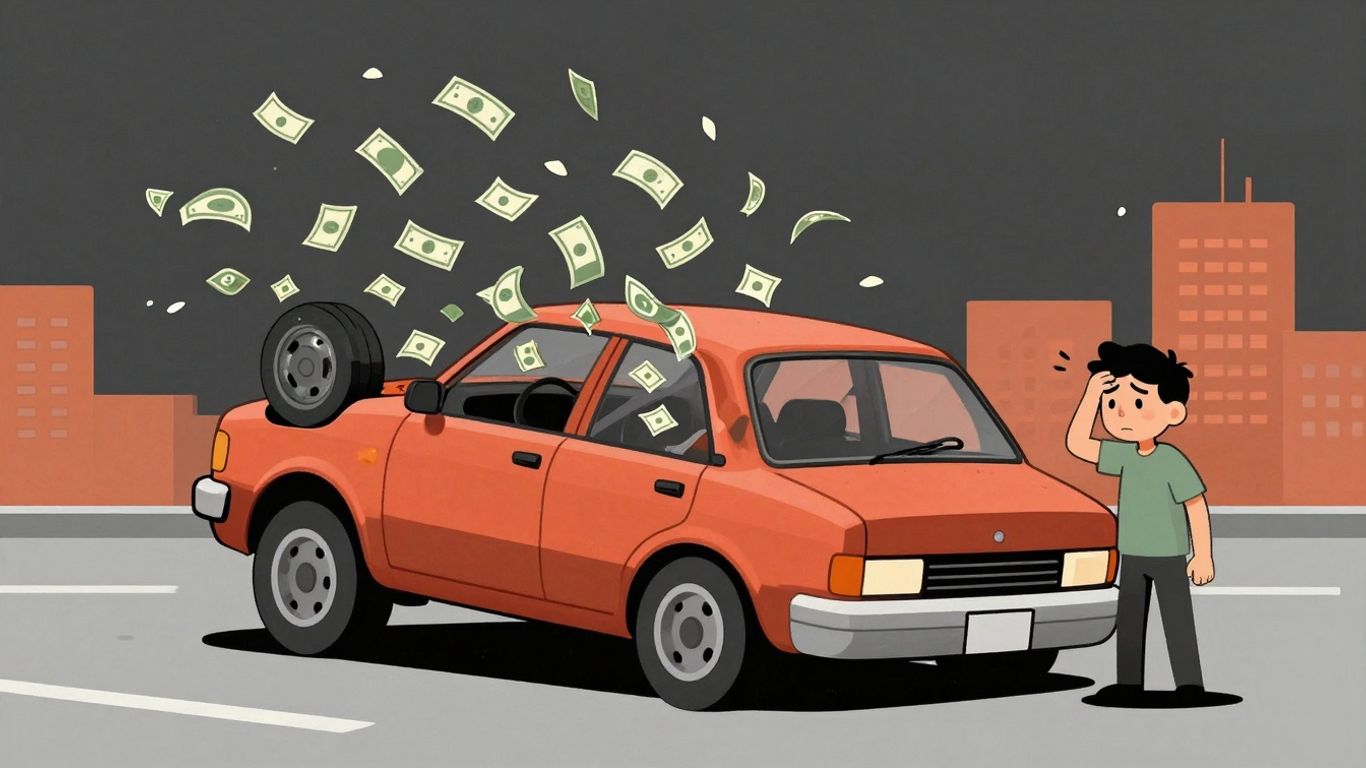
So, you owe more on your car than it’s actually worth. It happens to a lot of people, and honestly, it can feel pretty stressful. You’re stuck with a car that’s losing value, and you’re still making payments. The good news is, you’re not stuck forever. There are ways to get out from under that upside-down car loan. Let’s look at how to get out of an upside down car loan and get your finances back on track.
Key Takeaways
- Being upside down on a car loan means you owe more on the loan than your car is worth.
- Selling your car or paying off the loan early are two main ways to get out of an upside-down car loan.
- Trading in your car or refinancing the loan usually doesn’t solve the problem and can make it worse.
- Calculating your negative equity is the first step to understanding how much you owe versus what the car is worth.
- Making extra payments, saving up the difference, or getting a personal loan can help you pay off the loan faster.
Calculate Your Negative Equity
Okay, first things first. Before you can even think about getting out of this upside-down car loan situation, you need to know exactly how deep you are in the hole. This is what we call ‘negative equity.’ It sounds a bit scary, but it’s just a number.
Basically, negative equity means you owe more on your car loan than your car is actually worth right now.
So, how do you figure this out? It’s pretty straightforward. You’ll need two numbers:
- What you still owe on the loan: Check your latest loan statement. It should clearly show your remaining balance.
- What your car is worth: This is where you need to do a little research. Look up your car’s make, model, year, mileage, and condition on sites like Kelley Blue Book (KBB) or Edmunds. Get a realistic estimate for a private sale, as you’ll usually get more than trading it in.
Once you have those two numbers, you just do a simple subtraction:
Amount You Owe - Current Car Value = Your Negative Equity
For example, if you owe $15,000 on your loan and your car is only worth $12,000, you have $3,000 in negative equity. That $3,000 is the amount you’d need to cover if you wanted to sell the car outright today and pay off the loan completely.
Knowing this number is super important. It’s the starting point for figuring out which of the next steps will actually work for your situation. Don’t skip this part!
It might feel a bit disheartening to see that number, but facing it is the first step to getting back on solid ground. You’ve got this!
Make Extra Payments
Okay, so you’re upside down on your car loan. It feels like a bit of a pickle, right? One way to start chipping away at that negative equity is by simply paying a little extra on your loan each month. Even a small amount can make a difference over time.
Think of it like this: your regular payment covers the interest and a bit of the principal. But if you can toss in an extra $20, $50, or even $100, that extra cash often goes straight to the principal balance. This means you’ll pay less interest overall and get out of debt faster. It’s always a good idea to check with your lender first, though, just to make sure those extra bucks are actually hitting the principal and not just getting applied to future interest.
Where can this extra money come from? Look around your budget. Maybe you can cut back on a few non-essentials for a while, like eating out less or skipping that subscription you don’t really use. Did you get a small bonus at work or a tax refund? That’s prime time to put it towards your car loan instead of letting it sit in your checking account.
Here are a few ideas to find that extra cash:
- Review your subscriptions: Cancel any you don’t use regularly.
- Pack your lunch: Making lunch at home a few days a week can save a surprising amount.
- Sell unused items: Declutter your home and make some quick cash.
- Look for small windfalls: Tax refunds, birthday money, or small bonuses can be put to good use.
Paying a little extra consistently can really help reduce the total interest you pay and shorten the life of your loan. It’s a straightforward way to take control and start digging yourself out of that hole.
Sell the Car
Okay, so you’ve crunched the numbers and realized you owe more on your car than it’s actually worth. It happens! One way to get out of this sticky situation is to sell the car. This might be your best bet if you need to get out from under the loan quickly.
When you sell, you have a couple of main options: a private sale or trading it in to a dealership. Selling it yourself, like to a friend or someone you find online, usually gets you more money. Think about listing it on sites like Craigslist or Facebook Marketplace. Just be upfront with potential buyers that you still owe money on the loan and that you’ll need to pay it off before they can get the title. You might even be able to arrange to do the payoff and title transfer at the lender’s office to make things smoother.
Trading it in at a dealership is often easier and faster, but you’ll likely get less money for it. The dealer has to make a profit, after all, so they’ll offer you a lower price. If you’re trading it in for a new car, sometimes selling it to a different dealership can give you a bit more wiggle room on price.
Here’s a quick look at the pros and cons:
- Private Sale:
- Pros: Usually get more money.
- Cons: Takes more time and effort (advertising, meeting buyers, handling paperwork).
- Trade-In to Dealership:
- Pros: Quick and convenient, especially if buying another car from them.
- Cons: You’ll likely get less money for your car.
Remember, even if you sell the car and still owe money, you’ll need to cover that difference. This is where other options, like getting a personal loan, might come into play to pay off the remaining balance.
Refinance Your Loan
So, you’re in a bit of a pickle with your car loan, owing more than the car is actually worth. It happens, and honestly, it’s super common. One way to try and dig yourself out is by refinancing. This basically means getting a new loan to pay off your old one. The main goal here is usually to snag a lower interest rate. If your credit score has improved since you first got the loan, you might qualify for better terms now. A lower rate means less of your payment goes to interest and more goes to the actual loan balance.
Think of it like this:
- Your old loan: High interest, maybe a longer term.
- Your new loan: Lower interest, potentially a shorter term (if you can swing it).
The sweet spot is refinancing to a lower interest rate without extending the loan term too much. If you can keep your monthly payments about the same or only slightly higher, you can pay down that principal faster. It’s a smart move if you plan on keeping the car for a while longer. Just be sure to shop around and compare offers from different lenders to find the best deal. You don’t want to trade one bad loan for another, right? Checking out options for auto refinance is a good first step.
It’s important to be realistic, though. Refinancing might not magically erase your negative equity, but it can make the situation more manageable by reducing the amount you pay in interest over time. This can help you catch up to where the car’s value meets what you owe.
Keep Your Car for Longer
Sometimes, the best way to get out of an upside-down car loan is to just… wait it out. Think of it like this: your car loses value fastest when it’s brand new. After a few years, that depreciation rate really slows down. So, if you can hang onto your current ride for a while longer, your loan balance will start to catch up to what the car is actually worth.
The longer you keep your car, the more likely it is that your loan balance will eventually be less than or equal to the car’s market value. This is especially true if you’re making regular payments. You’re chipping away at the principal, and while the car’s value is still dropping, it’s not dropping as dramatically as it used to.
Here’s a little more on why this works:
- Slower Depreciation: Cars typically lose a big chunk of their value in the first year or two. After that, the value drop becomes much more gradual. This means your loan balance has a better chance of catching up.
- Principal Paydown: Every payment you make reduces the amount you owe. Even if you’re not making extra payments, you’re still steadily decreasing the principal.
- Avoiding New Debt: By keeping your current car, you avoid taking on a new loan, which could put you in a similar upside-down situation all over again.
While keeping your car longer won’t magically erase negative equity overnight, it’s a solid strategy to let time and consistent payments do the heavy lifting. It buys you time for the market value and your loan balance to align, making future transactions much smoother.
Save Up the Difference
Okay, so you’ve figured out exactly how much you owe on your car that you don’t have in value. It’s a tough number to look at, for sure. But instead of panicking or making a rash decision, let’s talk about a more patient approach: saving up that difference. This means you’ll keep the car for a bit longer, but the goal is to bridge that gap so you can sell it later without taking a huge hit.
This strategy is all about making a plan and sticking to it. It’s not the fastest way out, but it can be a really solid option if you’re not in a rush and want to avoid taking on more debt or making a deal that feels like a loss.
Here’s how you can tackle saving up the difference:
- Create a Budget: Seriously, this is step one for almost any money goal. You need to know where your money is going. Track your spending for a month. You might be surprised where you can trim things down. Look for those little expenses that add up – daily coffees, subscriptions you don’t use, impulse buys.
- Cut Back on Spending: Once you see where your money is going, start making cuts. Maybe it’s eating out less, canceling unused gym memberships, or finding cheaper entertainment options. Every dollar you save can go straight towards that car loan difference.
- Boost Your Income: Can you pick up a side hustle? Sell some things you don’t need anymore? Even a little extra cash flow can make a big difference over time. Think about things like freelance work, selling crafts, or even just picking up extra shifts at your current job.
- Automate Your Savings: Set up an automatic transfer from your checking account to a dedicated savings account each payday. Treat this savings goal like any other bill. The key is consistency.
This method requires discipline. It’s about making conscious choices with your money every single day. It might feel slow at first, but seeing that savings balance grow is incredibly motivating. Plus, you’re building a habit of saving that will help you in the long run, way beyond just this car loan situation.
It might take some time, but by diligently saving, you can eventually pay off the difference and sell your car on your own terms, avoiding a lender’s auction or a desperate trade-in. It’s about taking control and working towards a better financial spot.
Get a Personal Loan for the Difference
So, you’ve crunched the numbers and realized you owe more on your car than it’s actually worth. It’s a tough spot, for sure. One way to get out from under that sinking feeling is to sell the car and then take out a personal loan to cover the gap between what you owe and what you sell it for.
This might sound counterintuitive – taking on more debt to get out of debt – but hear me out. Sometimes, it’s a strategic move. If you can get a personal loan with a lower interest rate than your car loan, you could end up saving money in the long run. Plus, it lets you ditch the car that’s costing you more than it’s worth.
Here’s a quick rundown of how this might work:
- Sell Your Car: Try to sell it yourself, maybe through private listings. You’ll likely get more money this way than trading it in. Just be upfront with potential buyers that you’ll need to pay off the loan before they can get the title.
- Calculate the Difference: Figure out exactly how much you’re
Negotiate With the Lender
Okay, so you’re in a tough spot with your car loan, owing more than the car is actually worth. It feels pretty crummy, right? Before you throw your hands up, consider talking directly to the company you owe money to. They might not be thrilled about your situation, but they also don’t want to deal with a defaulted loan. Sometimes, they’re willing to work with you to find a solution that’s better than losing the car and not getting paid.
Don’t be afraid to ask for a little breathing room. You might be surprised at what they’re willing to consider. It’s worth a shot, especially if you’ve been a good customer and made your payments on time up until now.
Here are a few things you could try discussing:
- Payment Deferral: Ask if they can push back your payments for a few months. This doesn’t make the debt disappear, but it can give you some much-needed time to get back on your feet or figure out your next move without the immediate pressure of a payment.
- Interest Rate Reduction: If your credit has improved since you first got the loan, you might be able to negotiate a lower interest rate. This won’t change the principal amount you owe, but it can lower your monthly payments and save you money over the life of the loan.
- Loan Modification: In some cases, they might be willing to modify the loan terms. This could mean extending the loan period, which would lower your monthly payments but likely increase the total interest paid. Or, they might explore other options to adjust the loan to a more manageable level.
Remember, the goal here is to find a middle ground. You want to avoid falling further behind, and they want to get paid. Approaching them with a clear understanding of your financial situation and a willingness to discuss solutions can go a long way. Be polite, be prepared, and see what happens.
It’s important to have a clear picture of your finances before you call. Know exactly how much you owe, what the car is worth, and what you can realistically afford. This preparation will make your conversation much more productive. You’re not just asking for a favor; you’re proposing a way to ensure they still get their money, even if it’s not exactly according to the original plan.
Borrow From Family or Friends
Okay, so you’ve crunched the numbers, and you’re still short on what you owe on your car. Your next thought might be to ask the people closest to you for a loan. This can be a tricky path to go down, and honestly, it’s not usually the first choice for a reason. While family and friends might be willing to help you out of a jam, it can put a serious strain on your relationships.
Think about it: you’re essentially creating a formal debt between people who care about each other. This can lead to awkward conversations about repayment schedules, and maybe even some judgment about how you’re managing your money. It’s easy for a simple loan to turn into a source of tension, and nobody wants that.
If you do decide to go this route, it’s super important to treat it like any other financial transaction. You’ll want to:
- Set clear terms: Agree on the exact amount, the interest rate (if any), and a realistic repayment timeline. Put it in writing, even if it’s just a simple agreement.
- Make payments on time: This is non-negotiable. Show your lender (your family member or friend) that you’re serious about paying them back.
- Communicate openly: If you foresee any issues with making a payment, talk to them before it’s due. Honesty is key here.
It’s also worth noting that if you’re borrowing from parents, the IRS generally doesn’t get too concerned about small personal loans made to children, which can simplify things a bit. You can find more details on IRS loan rules.
Ultimately, while borrowing from loved ones can be a lifeline, it’s often better to explore other options first if possible. The goal is to solve your car loan problem without creating new relationship problems.
Create a Budget
Okay, let’s talk about budgets. I know, I know, the word itself can make some people groan. But honestly, when you’re trying to dig yourself out of an upside-down car loan, a budget isn’t just a good idea, it’s pretty much your best friend. Think of it as a roadmap for your money.
Without a budget, it’s super easy for money to just… disappear. You might be spending more than you realize on things that aren’t really that important in the grand scheme of things. A budget helps you see exactly where every dollar is going. This clarity is the first step to finding extra cash to throw at that car loan.
Here’s how to get started:
- Track Your Spending: For a month, write down everything you spend money on. Every coffee, every impulse buy, every bill. You can use a notebook, a spreadsheet, or a budgeting app. Just get it all down.
- Categorize Your Expenses: Group your spending into categories like housing, food, transportation, entertainment, debt payments, etc.
- Identify Areas to Cut Back: Look at your categories. Are there places where you can realistically spend less? Maybe it’s eating out less, cutting back on subscriptions you don’t use, or finding cheaper alternatives for entertainment.
- Allocate Funds: Decide how much you want to spend in each category for the next month. Be realistic, but also be firm about your goals.
A budget isn’t about restriction; it’s about intention. It’s about telling your money where to go instead of wondering where it went. When you’re trying to tackle a tricky car loan, this intentionality is key to making real progress.
Once you have a clear picture of your income and expenses, you can start to see where you can free up money. Maybe you find an extra $50 here or $100 there. That money can then be directed towards making extra payments on your car loan, helping you get out of that negative equity faster.
Creating a budget is a smart move for your money. It helps you see where your cash is going and plan for the future. Think of it like a roadmap for your finances. Ready to take control? Visit our website to learn how to build your own budget today!
Wrapping It Up
Okay, so being upside down on your car loan feels pretty rough, like you’re stuck with a car that’s costing you more than it’s worth. But remember, you’ve got options! We’ve talked about a few ways to tackle this, whether it’s making extra payments, looking into refinancing, or even selling the car if that makes sense for you. It might take some effort and maybe a few sacrifices, but getting out from under that loan is totally doable. The main thing is to have a plan and stick with it. You can do this, and you’ll feel so much better once that car loan is a thing of the past.
Frequently Asked Questions
What does it mean to be ‘upside down’ on a car loan?
Being ‘upside down’ on a car loan means you owe more money on your car loan than your car is actually worth right now. Think of it like owing more on a house than it’s worth – the car’s value has dropped faster than you’ve paid off the loan.
Why is being upside down on a car loan a problem?
It’s a problem because if you need to sell your car or if it gets totaled, you’ll have to pay the difference between what you owe and what the car is worth. This can be a big chunk of money that you might not have readily available.
Can I just trade in my car if I’m upside down?
Trading in your car doesn’t make the problem disappear. The extra amount you owe on the old car usually gets added to your new car loan, meaning you’ll owe even more and likely have higher monthly payments.
What’s the best way to figure out how much I owe versus what my car is worth?
You can find out how much you owe by looking at your loan statement. To see what your car is worth, check websites like Kelley Blue Book (KBB) or Edmunds. They give you estimates for private sales and trade-ins.
How can making extra payments help?
When you make extra payments, especially on the principal (the main amount you borrowed), you pay down the loan faster. This means you’ll pay less interest over time and get out of debt sooner, closing the gap between what you owe and what the car is worth.
Is refinancing a good idea if I’m upside down?
Refinancing *might* help if you can get a lower interest rate, which saves you money on interest. However, it doesn’t solve the core problem of owing more than the car is worth. You’re still in the same basic situation, just maybe with a slightly better rate.
What’s the difference between selling the car privately and trading it in?
Selling it privately usually gets you more money because you’re selling directly to another person. Trading it in to a dealer is often easier and faster, but dealers have to make a profit, so they’ll typically offer you less than what the car is worth on the open market.
If I sell my car and owe money, what are my options for the difference?
If you sell your car and still owe money, you might need to cover that difference. You could save up the money, take out a personal loan (if you qualify), or borrow from family or friends, though borrowing from loved ones can sometimes strain relationships.