Thinking about using your 401(k) to buy a house? It’s a big decision, and honestly, it’s not always a straightforward ‘yes’ or ‘no.’ This 401k loan for home purchase strategy can seem appealing because it’s your money, right? But there are definitely layers to it. We’re going to break down how it works, when it might actually be a smart move, and importantly, when it could turn into a real headache. Let’s figure out if this is a good plan for you or something to steer clear of.
Key Takeaways
- A 401(k) loan lets you borrow from your retirement savings, typically up to 50% of your vested balance or $50,000. You pay it back with interest, and that interest goes back into your account.
- This can be a way to bridge a cash gap for a down payment or closing costs, especially if you need funds quickly and other options aren’t ideal.
- The biggest downside is losing out on potential investment growth while the money is out of your account. This could significantly impact your retirement savings down the line.
- If you leave your job, you might have to repay the loan quickly. If you can’t, the outstanding balance can be taxed and hit with penalties, especially if you’re under 59½.
- Consider alternatives like first-time homebuyer programs, FHA or VA loans with lower down payments, or tapping into an IRA, which has specific rules for home purchases.
Understanding the 401(k) Loan for Home Purchase
So, you’re thinking about using your 401(k) to help buy a house. It’s a move a lot of people consider, and it’s not always a bad idea, but it’s definitely something you need to understand inside and out before you do it. Let’s break down how these loans actually work.
How Does a 401(k) Loan Actually Work?
Basically, a 401(k) loan lets you borrow money from your own retirement savings. Think of it like taking an advance on money that’s already yours. Your employer’s plan has to allow loans for this to even be an option, so that’s the first thing to check. If it does, you’ll be borrowing from the money you’ve put in, and sometimes from any employer match that’s vested. The cool part? The interest you pay on the loan goes back into your 401(k) account, not to some bank. Payments are usually taken right out of your paycheck, which makes it pretty automatic.
What Are the Limits on How Much You Can Borrow?
There are rules about how much you can take out. Generally, you can borrow up to 50% of your vested account balance, but there’s also a hard cap of $50,000. So, if you have a really large balance, say $200,000, you can’t just take out half of it. You’re still limited to that $50,000 maximum. If your balance is smaller, like $30,000, then 50% of that would be $15,000, and that would be your limit.
What Are the Typical Repayment Terms?
Most 401(k) loans have a repayment period of up to five years. This is pretty standard. However, if you’re using the loan specifically to buy your primary home, some plans might let you extend that repayment period to match your mortgage term. This can make your monthly payments smaller, but it’s something to really think through.
- Loan Amount: Lesser of 50% of vested balance or $50,000.
- Interest Rate: Often Prime Rate + 1%.
- Repayment Period: Typically up to 5 years, potentially longer for a primary residence purchase.
Remember, even though you’re paying yourself back with interest, the money you borrow is out of the market. This means you miss out on any potential investment growth during the time the loan is outstanding. It’s a trade-off you need to weigh carefully.
When a 401(k) Loan for a Home Might Make Sense
Okay, so we’ve talked about what a 401(k) loan is. Now, let’s get real about when it might actually be a good idea, especially when you’re trying to buy a house. It’s not always the first thing people think of, but sometimes, it can be a helpful tool.
Bridging a Short-Term Cash Crunch for Closing
Imagine this: you’re selling your current home and buying a new one. Everything’s lined up, but then, surprise! The closing on your old place gets delayed by a few weeks. Suddenly, you need that down payment money for the new house now, but the funds from your sale aren’t available yet. This is where a 401(k) loan could step in. It can act as a temporary bridge, letting you close on your new home while you wait for the proceeds from your old one to come through. Once that money arrives, you can immediately pay back the loan, minimizing the time your retirement funds were out of play.
Meeting Down Payment Requirements Quickly
Let’s face it, saving up a down payment can take ages. If you’ve been diligently contributing to your 401(k) for years, that balance might be your biggest asset. If a great home opportunity pops up and you’re close to having enough for a down payment but not quite there, a 401(k) loan could help you seize the moment. It might be faster than waiting years to save the same amount outside of your retirement account. Just be sure to do the math on how those loan payments will affect your budget alongside your new mortgage.
Avoiding Costlier Borrowing Options
Sometimes, when you need cash fast, the alternatives can be pretty rough. Think high-interest credit cards or personal loans with sky-high rates. A 401(k) loan often comes with a lower interest rate than these options, and importantly, the interest you pay goes back into your own account. Plus, you don’t need a credit check to get one, which can be a lifesaver if your credit score isn’t perfect. It’s about weighing the cost of borrowing from yourself against the cost of borrowing from someone else at a much higher rate.
The Potential Downsides of Tapping Your Retirement Savings
Okay, so you’re thinking about using your 401(k) for a down payment. It sounds like a quick fix, right? But before you go raiding your retirement nest egg, let’s chat about some of the not-so-great stuff that can happen. It’s easy to get caught up in the excitement of buying a home, but it’s super important to know the full picture.
Losing Out on Investment Growth
Think of your 401(k) like a little money tree that’s supposed to grow over time. When you take money out, even if it’s a loan, you’re essentially cutting off some of those branches. That cash isn’t in the market anymore, so it can’t grow. This means you miss out on potential gains, especially if the market is doing well. It’s like putting your money in a time-out, and it might take a while to catch up.
Let’s say you have $20,000 in your account and you borrow $10,000. If that money could have grown by 7% each year, in 25 years, the original $20,000 could have become over $108,000. But if you took out $10,000, the remaining $10,000 might only grow to about $54,000. That’s a pretty big difference!
The Risk of Double Taxation
This is a tricky one. When you take a loan from your 401(k), you pay it back with money you’ve already paid taxes on (after-tax dollars). But here’s the kicker: when you eventually retire and withdraw that money again, you’ll pay taxes on it a second time. So, the money you borrowed and paid back gets taxed twice. It’s like paying for something twice when you only got it once.
Impact on Your Future Retirement Security
This is probably the biggest concern. Your 401(k) is meant to be your safety net for when you stop working. Taking money out now, especially if you can’t pay it back quickly, can seriously mess with your retirement plans. You might end up with less money than you expected when you actually need it, which could mean working longer or having a much tighter budget in your golden years. It’s a trade-off between a short-term goal (buying a house) and a long-term need (retirement).
Borrowing from your 401(k) might seem like a good idea in the moment, especially when you’re eager to buy a home. However, it’s important to remember that this money is specifically set aside for your future. Reducing that amount now can have significant ripple effects down the line, impacting not just your financial well-being but also your peace of mind during retirement.
Key Considerations Before Taking a 401(k) Loan
So, you’re thinking about borrowing from your 401(k) to buy a home. It sounds like a quick fix, right? But before you jump in, let’s chat about a few things you really need to think about. It’s not just about getting the cash; it’s about understanding the whole picture.
Will Your Plan Allow Loans?
First off, not every 401(k) plan even lets you take out a loan. Your employer has to set it up that way. So, step one is to check with your HR department or look at your plan documents. If loans aren’t an option, then this whole discussion is moot, and you’ll need to explore other avenues for your home purchase funds.
What Happens If You Leave Your Job?
This is a big one. If you leave your job for any reason – you quit, you get laid off, or even if you retire – your loan might become due much sooner than you expect. Usually, you’ll have a short window, sometimes as little as 60 days, to pay back the entire outstanding balance. If you can’t, the remaining amount is treated as a taxable distribution. That means you’ll owe income tax on it, and if you’re under 59½, you’ll likely get hit with a 10% early withdrawal penalty too. It’s a serious consequence to consider, especially if your job situation feels uncertain. You can find out more about borrowing from a 401(k) plan.
Understanding the Interest You’ll Pay
When you take a loan from your 401(k), you’ll pay interest on it. The good news is that this interest usually goes back into your own account, which feels like a win. However, here’s the catch: you’re paying this interest with money you’ve already paid taxes on (after-tax dollars). Then, when you eventually withdraw that money in retirement, you’ll pay taxes on it again. This is often called
Comparing 401(k) Loans to Other Home Buying Funds
So, you’re thinking about using your 401(k) to help buy a home. It’s a big decision, and it’s smart to look at all your options. While a 401(k) loan might seem like a quick fix, it’s really important to see how it stacks up against other ways to get the cash you need for a down payment or closing costs.
Exploring Individual Retirement Accounts (IRAs)
IRAs are retirement accounts, just like 401(k)s, but they’re managed individually. The biggest difference when it comes to buying a home? You generally can’t take a loan from an IRA. You’d have to make a withdrawal, which usually means paying taxes and a penalty if you’re under 59½. Some exceptions exist, like for a first-time home purchase, where you might avoid the 10% penalty on withdrawals up to a certain limit, but you’ll still owe income tax on the amount taken out. This is a key distinction from a 401(k) loan, which isn’t a taxable event if repaid on time.
Investigating Mortgage Programs and Assistance
There are a bunch of mortgage programs out there designed to help people buy homes, especially first-time buyers. These can include options with lower down payment requirements, like FHA loans or VA loans for eligible veterans. Some local or state programs even offer down payment assistance grants or low-interest loans. These programs often have income limits or other requirements, but they can be a fantastic way to get into a home without touching your retirement savings. It’s worth looking into what’s available in your area.
Considering Other Savings or Investment Accounts
Do you have other savings accounts, brokerage accounts, or even certificates of deposit (CDs)? These might be a better place to pull funds from for a home purchase than your 401(k). While you might have to pay taxes on any investment gains if you sell assets, you generally avoid the penalties associated with early retirement withdrawals. Plus, keeping your retirement money invested means it continues to grow. Using funds from non-retirement accounts preserves your long-term financial security.
Here’s a quick look at how they compare:
| Feature | 401(k) Loan | IRA Withdrawal (First-Time Homebuyer) | Other Savings/Investments | Mortgage Programs/Assistance |
|---|---|---|---|---|
| Loan Possible? | Yes | No (Withdrawal only) | Varies | N/A |
| Taxable Event? | No (if repaid) | Yes (income tax) | Yes (on gains) | No |
| Early Withdrawal Penalty? | No (if repaid) | No (up to limit) | No | No |
| Impact on Retirement | Potential loss of growth, repayment burden | Reduced retirement funds | Reduced available funds | Minimal (helps acquire asset) |
When you’re comparing options, think about the immediate need for cash versus the long-term impact on your retirement. Sometimes, the ‘cheapest’ money upfront can end up costing you more down the road.
Navigating the Loan Repayment Process
Making Timely Payments is Crucial
Alright, so you’ve decided to take out a loan from your 401(k) to buy that house. That’s a big step! Now comes the part where you actually pay it back. Making your loan payments on time, every time, is super important. Think of it like any other loan – missing payments can lead to some serious headaches down the road. Your plan administrator will usually set up automatic deductions from your paycheck, which is pretty convenient. It means you don’t have to remember to send in a check or log into a portal each month. Just make sure those deductions are actually happening! Sometimes, things get missed in the payroll system, and you might not even realize your payments aren’t going through. It’s a good idea to check your 401(k) statements regularly to confirm that your loan payments are being applied correctly.
The Importance of Continuing Retirement Contributions
This is a tricky one. When you’re juggling a mortgage and a 401(k) loan payment, it can be really tempting to hit the pause button on your regular retirement contributions. I get it, money feels tight! But here’s the thing: if your employer offers a match on your contributions, pausing your own contributions means you’re leaving free money on the table. That’s a double whammy because you’re not only paying back your loan, but you’re also missing out on potential growth in your retirement account. Try your best to keep those contributions going, even if it’s just a small amount. Your future self will thank you.
What Happens If You Miss a Payment?
Life happens, and sometimes a payment might get missed. If you miss a 401(k) loan payment, it’s not the end of the world, but you need to address it quickly. Depending on your plan’s rules, there might be a grace period to make up the missed payment. However, if you don’t catch up, your loan could be considered in default. This is where things get dicey. A default can trigger a cascade of negative consequences:
- Immediate Repayment: The entire outstanding loan balance could become due right away.
- Taxes and Penalties: If you can’t repay the full amount, the outstanding balance is treated as a taxable distribution. This means you’ll owe income tax on it, and if you’re under 59½, you’ll likely face an additional 10% early withdrawal penalty.
- Lost Growth: The money you borrowed is no longer invested, so it misses out on potential market gains.
It’s really important to understand that the rules around 401(k) loans, especially regarding defaults and repayment, can vary between plans. Always refer to your specific plan documents or speak with your plan administrator to know exactly what to expect.
Are There Alternatives to a 401(k) Loan for Homebuyers?
Thinking about using your 401(k) to buy a house is a big decision, and it’s totally understandable to explore all your options before dipping into retirement savings. Sometimes, there are other ways to get the funds you need without touching that nest egg. Let’s look at a few.
Utilizing First-Time Homebuyer Programs
Many government programs are designed to help folks buy their first home. These can be a lifesaver if you’re short on cash for a down payment or closing costs. Programs like those offered by the Federal Housing Administration (FHA) or the U.S. Department of Veterans Affairs (VA) often come with lower down payment requirements. For instance, VA and USDA loans can even let you buy a home with zero down. FHA loans typically require a minimum of 3.5% down, which is much less than the 20% some conventional loans ask for. These programs can make homeownership more accessible without needing a huge chunk of cash upfront.
Exploring Loans with Lower Down Payment Requirements
Beyond specific first-time buyer programs, many lenders offer conventional mortgage options that don’t demand a 20% down payment. While these might come with Private Mortgage Insurance (PMI), which adds a bit to your monthly payment, it can be a trade-off worth considering if it means you can buy a home sooner. Doing some shopping around with different lenders can reveal options that require less cash out of pocket initially.
Considering Other Savings or Investment Accounts
Before you even think about your 401(k), check out other savings and investment accounts you might have. For example, Individual Retirement Accounts (IRAs) have special rules for first-time homebuyers. You can often withdraw up to $10,000 from a traditional or Roth IRA without facing that hefty 10% early withdrawal penalty, as long as the money is used for a qualifying home purchase. With a Roth IRA, you can withdraw your contributions (the money you put in) anytime, tax and penalty-free. Just remember, there are rules about withdrawing earnings, especially from a Roth IRA, so it’s good to check those details.
It’s always a good idea to have a clear picture of all your financial resources before making a decision about your retirement funds. Sometimes, a little digging can uncover funds you’d forgotten about or options you hadn’t considered.
Considering a Different Timeline for Your Purchase
Sometimes, the best alternative is simply to adjust your timeline. If you’re finding it tough to gather the funds for a down payment or closing costs, maybe pushing your home purchase back a year or two could be the answer. This gives you more time to save up the necessary cash, potentially avoiding loans altogether and letting your retirement savings continue to grow undisturbed. It might feel like a delay, but it could save you a lot of financial stress down the road.
Understanding the Risks of Defaulting on Your Loan
Okay, so you’ve taken out a loan from your 401(k) to buy a house. That’s a big step! But what happens if, for some reason, you can’t keep up with the payments? It’s a scenario nobody wants to think about, but it’s super important to understand the potential fallout.
The Immediate Repayment Obligation
Life happens, right? Maybe you lose your job, or your income takes a hit. If you can’t make your 401(k) loan payments, the clock starts ticking really fast. Often, if you leave your job for any reason – whether you quit, get laid off, or are fired – your entire outstanding loan balance can become due almost immediately. Your plan might give you a short window, maybe 60 days or until the tax filing deadline for that year, to pay it all back. If you can’t come up with the cash, that’s when things get dicey.
Taxes and Penalties on Unpaid Balances
This is where it really stings. If you can’t repay the loan by the deadline, the outstanding amount is no longer considered a loan. Instead, the IRS treats it as an early withdrawal. This means you’ll owe regular income tax on that money. And, if you’re under the age of 59½, you’ll likely get hit with an additional 10% penalty for taking the money out too soon. So, that $10,000 you still owed on your loan could suddenly cost you a lot more when taxes and penalties are factored in.
The Impact on Your Credit Score
While a missed 401(k) loan payment itself doesn’t directly show up on your credit report like a missed credit card payment, the consequences of defaulting can indirectly harm your credit. If the unpaid loan balance is deemed a taxable distribution and you don’t pay the taxes owed, the IRS can take action. This could eventually lead to tax liens, which definitely show up on your credit report and can significantly lower your score. Plus, if you can’t pay the taxes, it might force you to take out other loans or use credit cards, which can impact your credit if not managed well.
Roth 401(k) vs. Traditional 401(k) for Home Loans
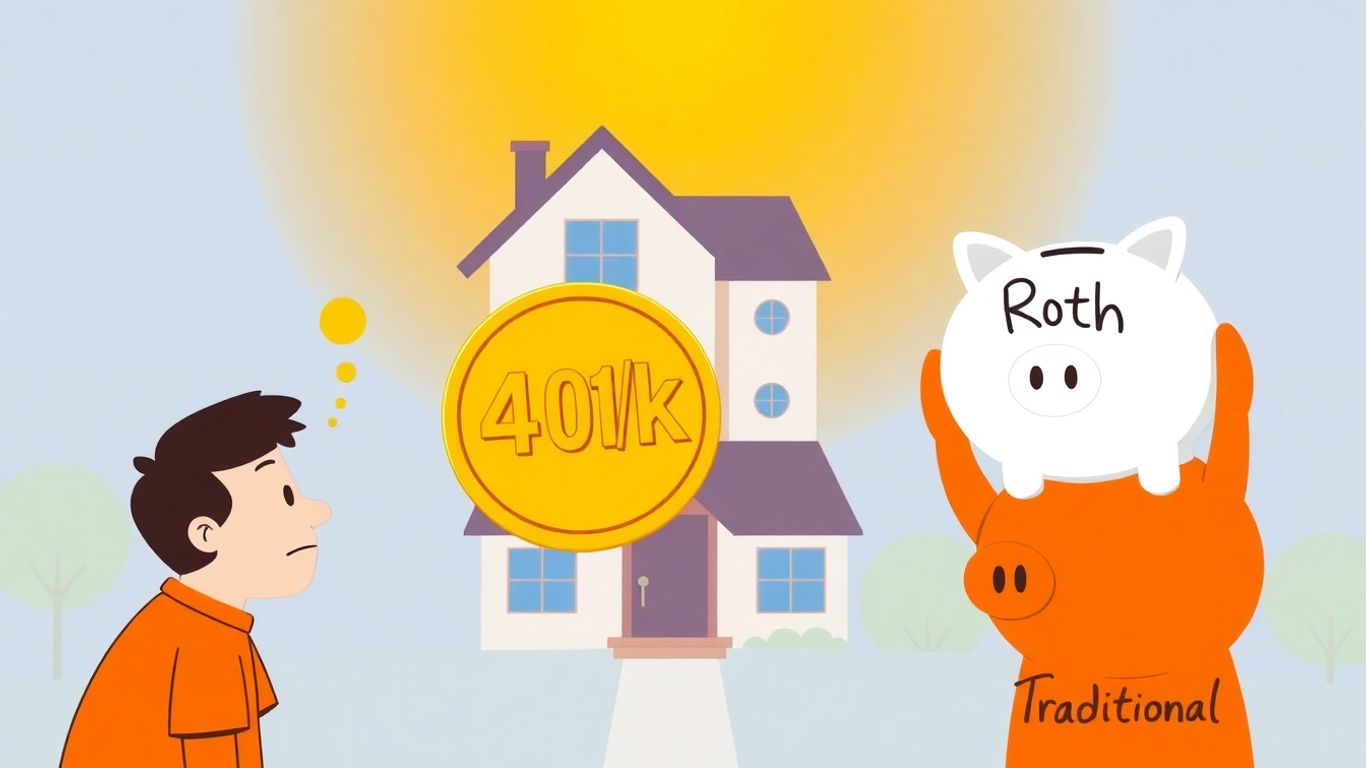
When you’re looking at using your 401(k) for a home purchase, it’s good to know that not all 401(k)s are created equal. The type of 401(k) you have – Roth or Traditional – can make a difference in how you access your money and what happens tax-wise. It’s not just about the loan itself, but the nature of the contributions you’ve made.
Withdrawal Rules for Roth Contributions
With a Roth 401(k), you contribute money that’s already been taxed. This means when you take out your contributions (not the earnings), you generally won’t owe any taxes or penalties, regardless of your age or why you’re taking the money. This can be a big plus if you need funds for a down payment or closing costs. However, if you withdraw any earnings your account has made before age 59½, those earnings will be subject to income tax and potentially a 10% penalty, unless you qualify for an exception. So, it’s important to keep track of what’s a contribution and what’s an earning.
Tax Implications for Traditional 401(k) Loans
If you have a Traditional 401(k), the money you contribute is usually pre-tax, meaning you get a tax break in the year you contribute. When you take a loan from a Traditional 401(k), the amount you borrow isn’t taxed at that moment, and you don’t pay the 10% early withdrawal penalty. That sounds good, right? But here’s the catch: you have to pay the loan back with interest. The interest you pay goes back into your 401(k) account, but it’s paid with after-tax dollars. This means the money you repay is essentially taxed twice – once when it was originally earned (pre-tax) and again when you pay back the loan with after-tax money. Also, if you leave your job before paying back the loan, the outstanding balance is often considered a taxable distribution, and you might owe that 10% penalty on top of income taxes.
Understanding Earnings vs. Contributions
This distinction is really key, especially with Roth accounts. For a Roth 401(k), you can withdraw your contributions anytime, tax- and penalty-free. Think of it like taking back money you already paid taxes on. But the earnings? Those are treated differently. They grow tax-free, but if you take them out early for a home purchase, you’ll likely face taxes and penalties. For a Traditional 401(k), the entire balance is generally considered pre-tax money. When you take a loan, you’re borrowing from that pre-tax pool. The repayment, however, is with after-tax money, leading to that potential double taxation scenario on the interest portion. It’s a bit like a puzzle, and understanding these pieces helps you see the full picture before you decide.
Here’s a quick look at how they generally differ for home buying purposes:
| Feature | Roth 401(k) | Traditional 401(k) |
|---|---|---|
| Contributions | After-tax (tax-free withdrawals of contributions) | Pre-tax (tax-deferred growth) |
| Loan Repayments | Paid with after-tax dollars | Paid with after-tax dollars (interest portion) |
| Tax on Loan Amount | None (for contributions) | None (initially) |
| Tax on Earnings | Yes, if withdrawn early | N/A (loan is from pre-tax balance) |
| Penalty on Loan | None (for contributions) | None (initially) |
| Double Taxation Risk | Low (for contributions) | Moderate (on interest paid back into the account) |
It’s really important to check the specific rules of your employer’s 401(k) plan. Some plans might have unique features or restrictions that could affect how you can borrow or withdraw funds, regardless of whether it’s a Roth or Traditional account. Don’t assume all plans work the same way.
Thinking about buying a home and wondering if your Roth 401(k) or Traditional 401(k) is the better choice? Both offer tax advantages, but they work differently when it comes to taking money out for big purchases like a house. Understanding these differences can help you make the smartest move for your financial future. Ready to explore your home loan options? Visit our website today to learn more and get started!
So, Is a 401(k) Loan for a House a Good Idea?
Okay, so we’ve talked a lot about borrowing from your 401(k) for a house. It’s not a simple yes or no answer, right? Sometimes, it can really help you snag that dream home when you need the cash fast, especially if other options just aren’t working out. But, and this is a big ‘but,’ you absolutely have to weigh the risks. Taking money out means it’s not growing for your future, and if you lose your job, things can get complicated fast with taxes and penalties. Think of it like a last resort, not your first choice. Always, always crunch the numbers and consider other ways to get the funds first. Your future self will thank you for being super careful with your retirement nest egg.
Frequently Asked Questions
Can I really borrow money from my 401(k) to buy a house?
Yes, you can borrow money from your 401(k) for a house, but it’s like taking a loan from yourself. Your plan has to allow it, and you can usually borrow up to half of what’s in your account, or $50,000, whichever is less. You have to pay it back with interest, and that interest goes back into your own retirement account.
Is taking money from my 401(k) a good idea for a down payment?
It can be, especially if you need the money quickly and don’t have other options. But remember, the money you borrow isn’t growing in your retirement account while you have the loan. This could mean less money for you when you retire, and you’ll also have to pay it back with money you’ve already paid taxes on.
What happens if I lose my job and still owe money on my 401(k) loan?
This is a big risk. If you leave your job, you usually have to pay back the entire loan very quickly, often within 60 to 90 days. If you can’t pay it back, the remaining amount is treated as a withdrawal, and you’ll have to pay taxes on it, plus a 10% penalty if you’re under 59 and a half years old.
Do I pay taxes on a 401(k) loan?
When you take the loan itself, you don’t pay taxes or penalties. However, you repay the loan with money you’ve already paid taxes on. Then, when you eventually withdraw that money in retirement, you’ll pay taxes on it again. This is sometimes called ‘double taxation’.
What’s the difference between a Roth 401(k) and a Traditional 401(k) for loans?
With a Roth 401(k), you’ve already paid taxes on the money you put in. You can take out your contributions tax-free and penalty-free. But if you take earnings, you’ll owe taxes and possibly a penalty. With a Traditional 401(k), the money grows tax-deferred, but you’ll owe taxes and potentially a penalty on any withdrawal or defaulted loan.
Can I use my IRA to buy a house instead of my 401(k)?
Yes, you can! For first-time homebuyers, you can often take out up to $10,000 from your IRA without a penalty. It’s a good alternative to explore because it might have fewer downsides than a 401(k) loan, though you should still check the specific rules for your IRA.
What if my 401(k) plan doesn’t allow loans?
If your plan doesn’t let you borrow from it, you can’t take a 401(k) loan. In this case, you’d have to look at other ways to get the money, like other savings accounts, selling investments, or exploring different loan options for buying a home. You might also consider withdrawing funds, but be aware of the taxes and penalties involved.
How much does it cost me to borrow from my 401(k)?
You’ll pay interest on the loan, which goes back to your own account. The interest rate is usually set by your plan. But the real cost is the potential investment growth you miss out on while the money is out of your account. Plus, you repay the loan with after-tax money, and then pay taxes again on those funds when you take them out in retirement.